How to Remove Hard Water Stains From a Glass Shower Door


The short answer
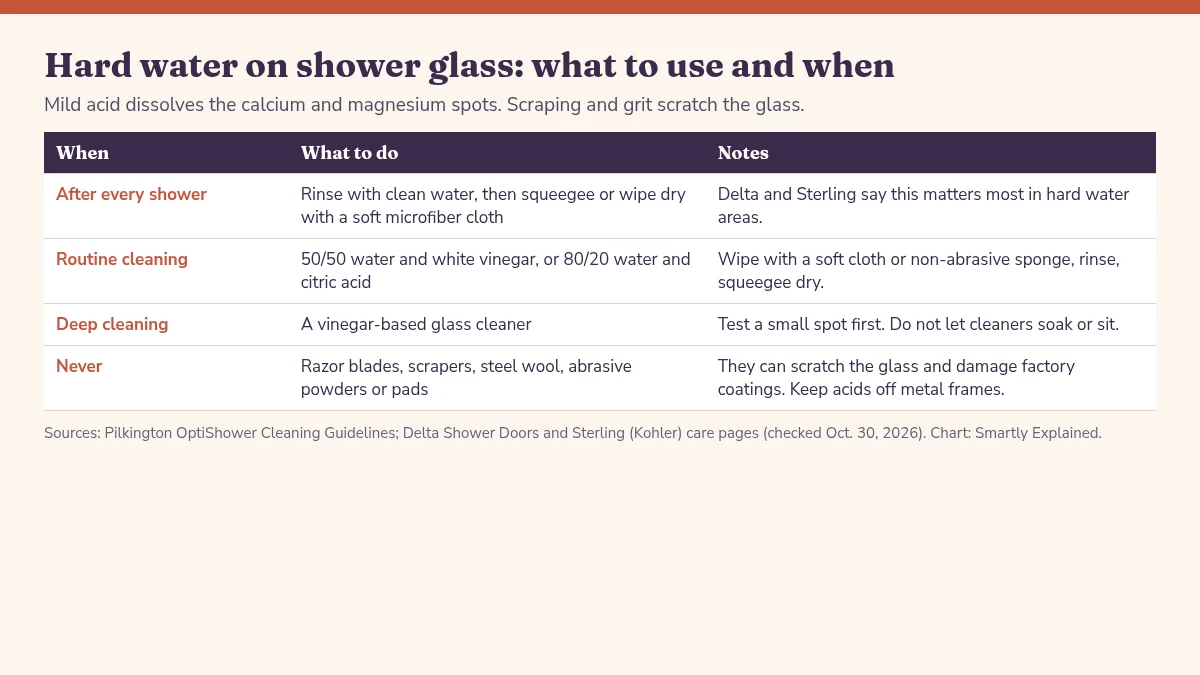
To remove hard water stains from a glass shower door, spray it with a 50/50 mix of white vinegar and water. Let it sit a few minutes, then wipe with a soft, non-scratch sponge. Rinse with clean water and squeegee or towel it dry. For heavy, chalky buildup, an 80/20 mix of water and citric acid is the next step up. Keep acid off the metal frame, and don't use razor blades, steel wool or gritty cleansers on the glass.
In this explainer
What hard water stains actually are
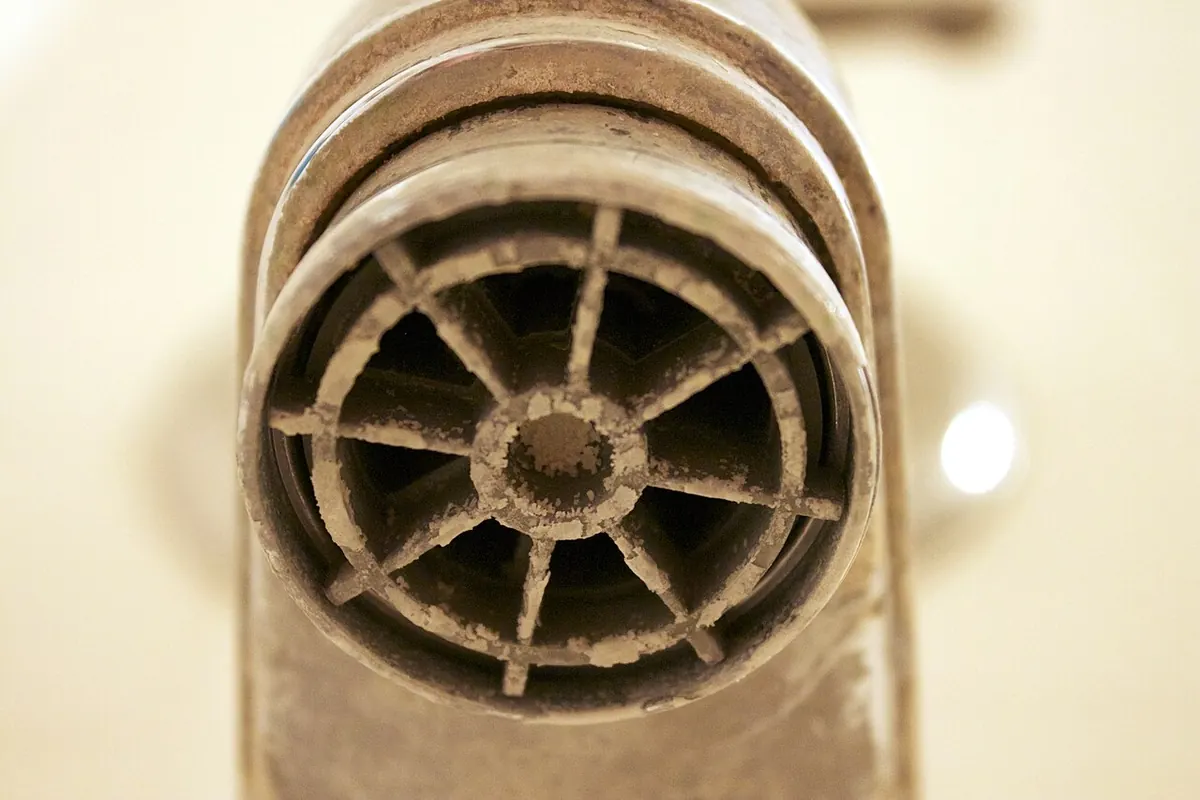
Those cloudy white spots aren't soap alone. They're minerals. The USGS Water Science School explains that water hardness comes mostly from dissolved calcium and magnesium. When shower water dries on glass, the minerals stay behind. The USGS scale:
| Hardness (mg/L as calcium carbonate) | Classification |
|---|---|
| 0 to 60 | Soft |
| 61 to 120 | Moderately hard |
| 121 to 180 | Hard |
| More than 180 | Very hard |
If your water falls in the hard or very hard range, expect spots to build up quickly. Soap combines with the minerals, too. University of Nebraska-Lincoln Extension says hard water increases films and stains from soaps and minerals, and that surfaces in contact with it need more frequent cleaning.
Why vinegar works
Acids loosen mineral scale. UNL Extension says household vinegar is about 4 to 8 percent acetic acid and may remove hard water deposits from glassware. Lemon juice, which contains citric acid, works much the same way. A University of Idaho Extension guide to household cleaning products also lists vinegar as a very mild acid that removes hard water deposits.
Glass makers recommend the same approach. The Pilkington OptiShower cleaning guidelines, written for coated shower glass, call for a 50/50 solution of water and white vinegar, or 80/20 water and citric acid, for routine cleaning in hard water areas. They suggest a vinegar-based cleaner for deep cleaning.
Step by step
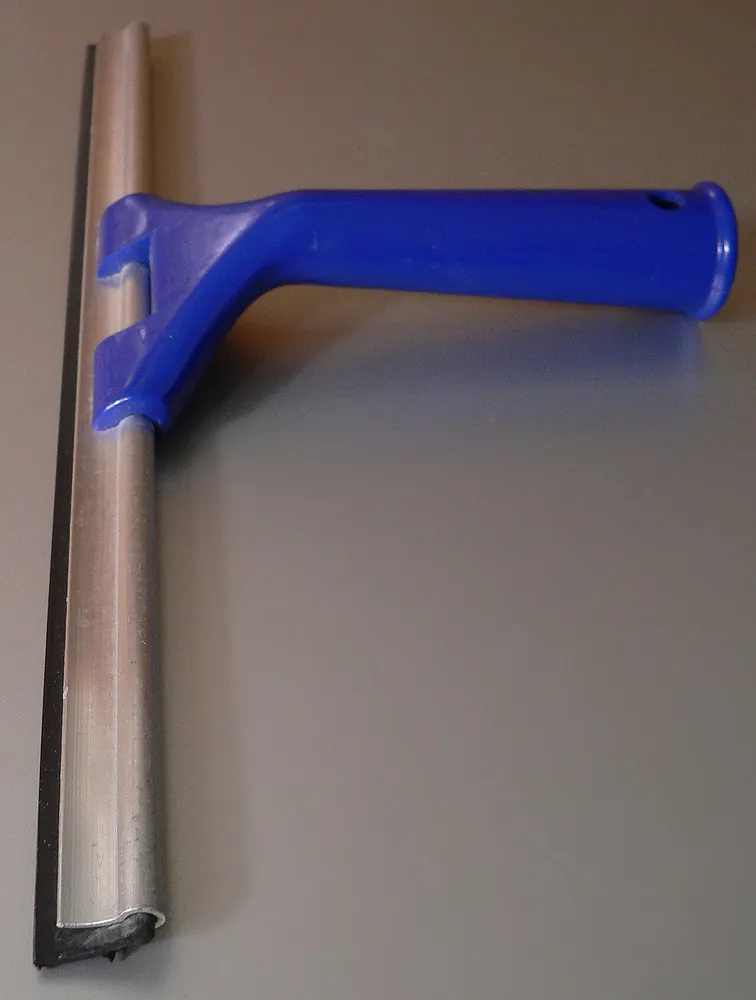
You'll need white vinegar, a spray bottle, a soft sponge or microfiber cloth, a squeegee and an old towel.
- Test first. Delta Shower Doors says to try any cleaning product on a small, inconspicuous area before using it on the whole door.
- Protect the frame and hardware. Lay a towel along the bottom track and cover metal handles. Sterling's care guide says never to use cleaners containing acids, ammonia, bleach or abrasives on metal surfaces, because they can damage the finish.
- Spray the glass with a 50/50 mix of white vinegar and water.
- Let it sit a few minutes, then wipe in circles with a soft sponge or microfiber cloth. Don't leave it to dry on the glass; Sterling advises against letting cleaners sit on the surface.
- Rinse with clean water and squeegee from top to bottom, then wipe the edges dry.
- Repeat for heavy buildup. If a haze remains, try the 80/20 water and citric acid mix that Pilkington lists, or a store-bought vinegar-based glass cleaner.
What not to use
- Razor blades, scrapers and steel wool. Pilkington warns these can damage the glass surface and its coating, just as with normal glass. Sterling says never to use sharp instruments on its glass panels.
- Gritty cleansers and scouring pads. Delta says not to use abrasive cleaners, bristly brushes or rough sponges. UNL Extension notes that coarse abrasives damage glass, and scratched surfaces get dirty faster.
- Acid on the frame. Vinegar is fine on the glass, but Sterling says acids can damage the finish on metal parts. Keep it on the glass and rinse any drips off the frame.
If your door has a protective coating
Many doors come with a factory coating that makes water bead off. Sterling treats its frameless doors with CleanCoat and says abrasive cleaners aren't recommended on that glass. Delta's Spot Guard is a hydrophobic coating on the inside panels. Check your door maker's care page before using anything stronger than diluted vinegar.
Keep spots from coming back
Prevention takes less than a minute per shower:
- Squeegee after every shower. Delta says to do this after each use and wipe the door dry with a soft microfiber cloth, especially if you have hard water.
- Wipe the door dry. Sterling says drying the door after each use helps avoid soap deposits and lime buildup in hard water areas.
- Leave the door open so the enclosure dries and air circulates, as Sterling suggests.
- Do a quick vinegar wipe weekly if your water is very hard, so the minerals never set.
If hard water is also leaving residue in your laundry, our guide to why laundry smells after washing covers what builds up in the washer.
Questions readers ask
What dissolves hard water stains on glass?
A mild acid. University of Nebraska-Lincoln Extension says vinegar, which is about 4 to 8 percent acetic acid, may remove hard water deposits from glassware, and lemon juice (citric acid) works much the same way.
What ratio of vinegar to water should I use on a shower door?
Pilkington's shower glass cleaning guidelines recommend a 50/50 solution of water and white vinegar, or an 80/20 solution of water and citric acid, for routine cleaning in hard water areas.
Can I use a razor blade on shower glass?
No. Pilkington warns that scrapers, steel wool and razor blades can damage the glass surface and its coating, and Sterling says never to use sharp instruments on its glass panels.
How do I keep hard water spots from coming back?
Squeegee the glass after every shower and wipe it dry. Delta and Sterling both say this is especially important in hard water areas.
Sources and fact-check
- Hardness of Water, USGS Water Science School
- NF93-133 Water Nuisances: Deposits on Household Surfaces, University of Nebraska-Lincoln Extension
- Household Cleaning Products (CIS 1010), University of Idaho Extension
- Pilkington OptiShower Cleaning Guidelines, Pilkington (NSG Group)
- Care and Cleaning, Delta Shower Doors
- How to Clean and Care for Bath and Shower Doors, Sterling (Kohler)
Rules change. Spot something out of date? Tell us.