Plants That Survive Low Light in an Apartment (No Grow Lights Needed)

The short answer
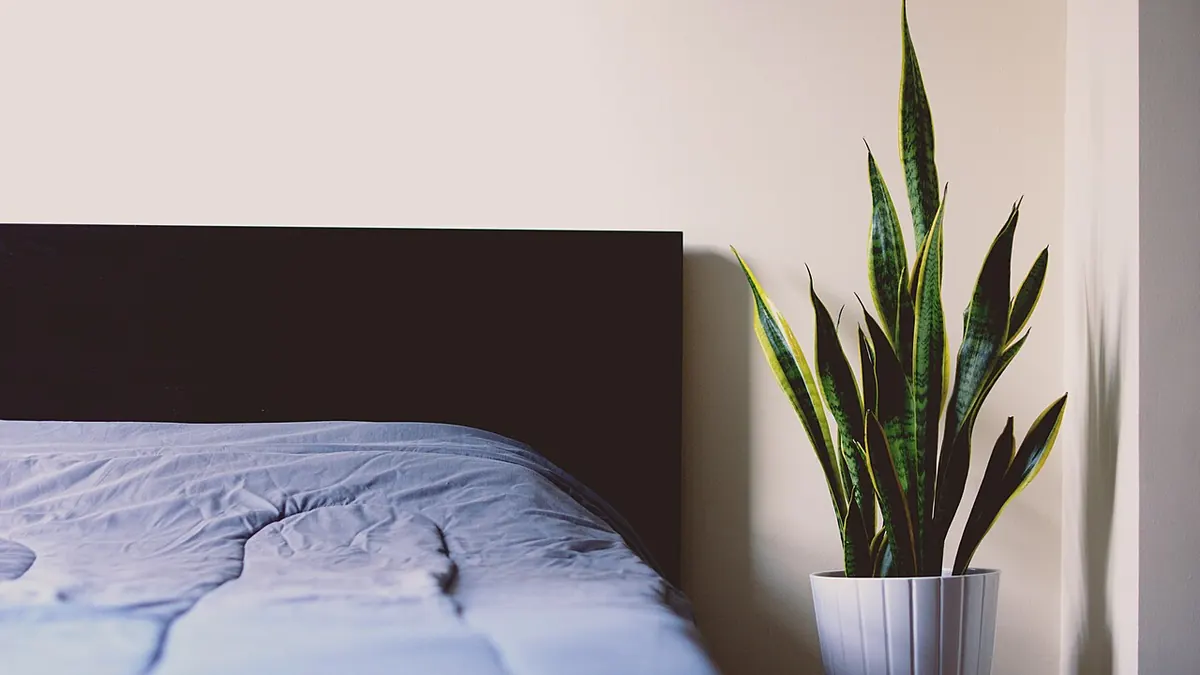
The plants most likely to survive a dim apartment without grow lights are the snake plant, ZZ plant, pothos, heartleaf philodendron and cast iron plant. All five are on low-light lists from university extension services, and all five do better when you water less, not more. Put them as close to a window as your space allows, and check whether your spot really is low light or closer to no light at all.
In this explainer
First, check how dark your spot is
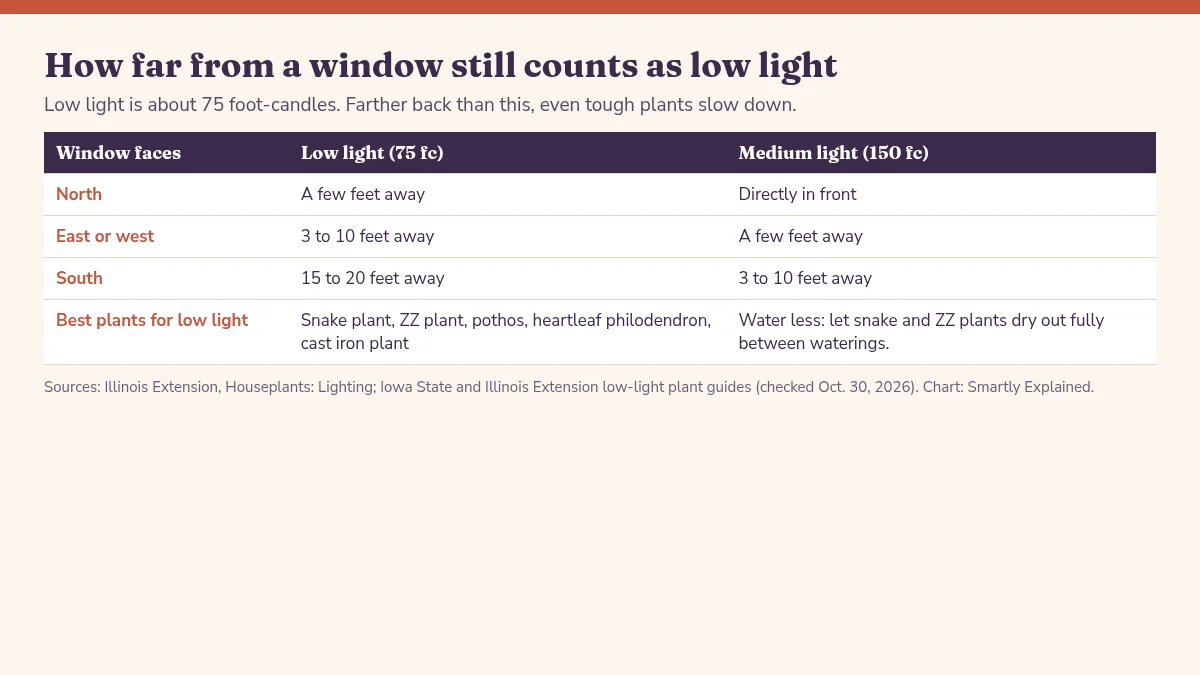
"Low light" doesn't mean a closet. Illinois Extension's houseplant lighting guide defines low light as about 75 foot-candles. In apartment terms, that's:
| Window faces | Low light starts | Medium light |
|---|---|---|
| North | A few feet away | Directly in front |
| East or west | 3 to 10 feet away | A few feet away |
| South | 15 to 20 feet away | 3 to 10 feet away |
If your plant sits farther back than the low-light distance, in a hallway, or in a room with blinds always shut, you're below low light. Even tough plants slow down there and may decline over months. Light from nearby buildings, porches and window coverings cuts it further, as Illinois Extension's low-light plant guide points out.
The five that handle low light best
| Plant | Light | Water | Pets (ASPCA) |
|---|---|---|---|
| Snake plant | Very low to bright | Let soil dry completely | Toxic to dogs and cats |
| ZZ plant | Low, indirect | When dry, about every 2 to 3 weeks | All parts poisonous (Illinois Extension) |
| Pothos | Low to moderate | Let soil dry moderately | Toxic to dogs and cats |
| Heartleaf philodendron | Low to indirect | Keep evenly moist | See the ASPCA list |
| Cast iron plant | Low | Evenly moist, well-drained | Non-toxic to dogs and cats |
1. Snake plant
If you've killed every plant you've owned, start here. University of Maryland Extension calls it likely the toughest plant on the planet and says it tolerates low light better than any other houseplant. It handles long dry spells but not overwatering. Iowa State's Yard and Garden team puts it bluntly: the only way to kill this plant is to overwater it. Illinois Extension says the soil should dry out completely between waterings, and that tall types usually reach 3 to 4 feet.
2. ZZ plant
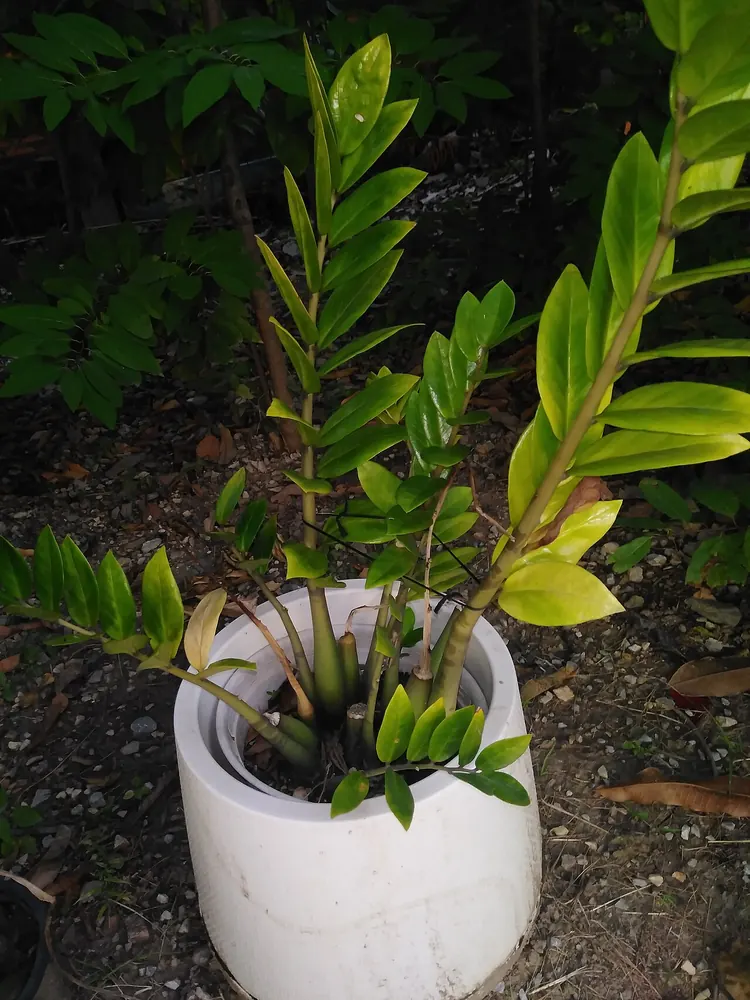
Glossy, dark leaves that look almost fake. Illinois Extension says ZZ plants grow best in low, indirect light and also grow under fluorescent lighting in rooms with little or no natural light, which makes them the best pick for an office or an interior room. Water when the soil is dry, on average every two to three weeks. Iowa State notes it tolerates dry soil and low humidity, and its leaves grow from an underground rhizome. Keep it away from pets and children: Illinois Extension says all parts of the plant are poisonous.
3. Pothos
A trailing vine you can let spill from a shelf. Iowa State calls it one of the easiest and most forgiving houseplants and says it grows in low to moderate light; let the soil dry moderately between waterings. One trade-off: University of Maryland Extension says that in very low light the yellow or cream variegation fades to green, though the plant keeps living.
4. Heartleaf philodendron
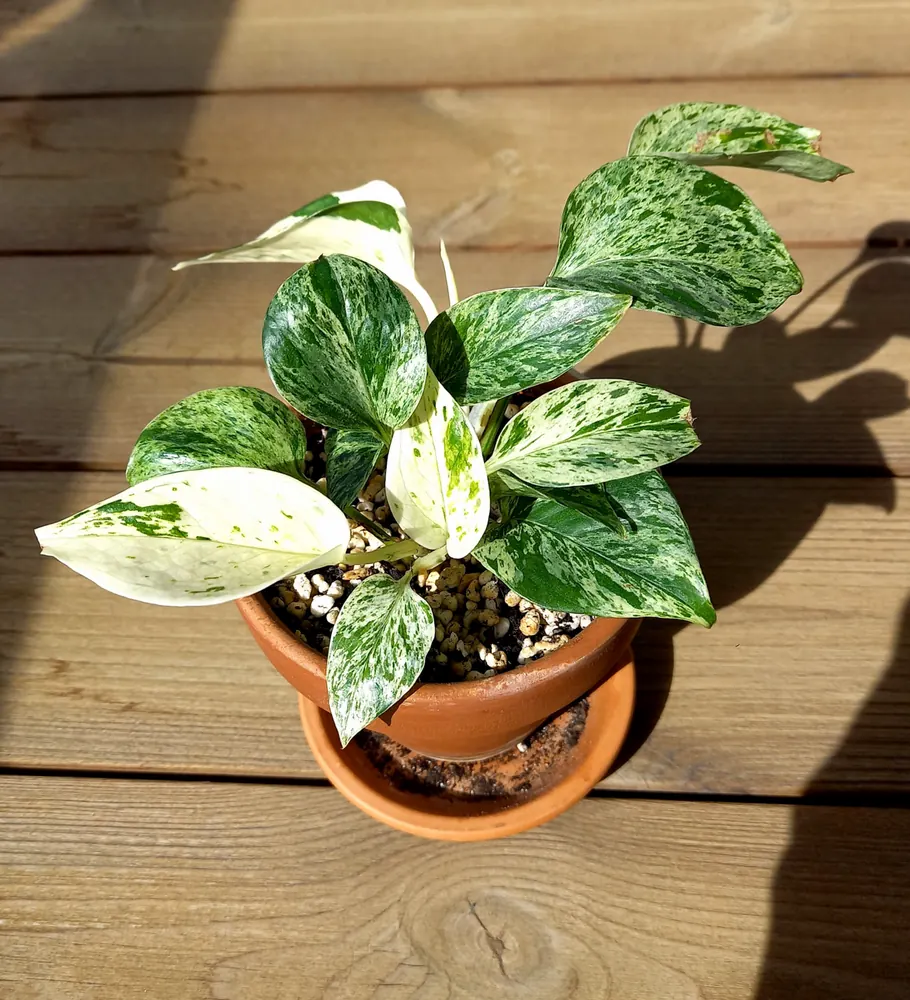
Another trailing plant, with 3- to 5-inch heart-shaped leaves. Iowa State says it grows in low to indirect light and should be kept evenly moist. Maryland Extension adds that philodendron vines prefer bright light but tolerate low light, and the growth gets more spindly the darker it is. Pinching the tips keeps it fuller.
5. Cast iron plant
Named for how hard it is to kill. Iowa State says it endures heat, dust, low light and lack of water better than most houseplants, with broad, glossy leaves up to 18 inches long. It's also the pet-friendly pick: the ASPCA lists cast iron plant as non-toxic to dogs, cats and horses.
Illinois Extension's other suggestions for low light include peperomia, Chinese evergreen, prayer plant, peace lily and spider plant.
Water less in low light
Watering too much is the classic low-light mistake. Experts at NC State's College of Agriculture and Life Sciences say most people water their plants too much, as if they were outdoors, and that dorm and apartment plants without direct sunlight don't absorb as much water. Illinois Extension notes low-light plants grow slower and need less water.
A simple routine:
- Stick a finger into the soil before you water.
- For snake and ZZ plants, wait until it's dry all the way down. For pothos, wait until the top is dry.
- Use a pot with a drainage hole and empty the saucer after watering.
- Expect to water less in winter, when days are shorter.
Signs your plant needs more light
Because low-light plants grow slowly, it can take a while to notice a problem. Illinois Extension lists the signs: stems get leggy or stretched, leaves turn a pale greenish-yellow, or the plant drops leaves. If you see these, move it closer to a window. NC State's advice is the same: if a plant struggles in low light, put it somewhere with more light.
If there's no brighter spot, adding light for longer helps. Illinois Extension says plants in low light benefit from 14 to 16 hours of light a day, and not more than 16, because they need a rest period. A lamp with an LED or fluorescent bulb on a timer can stretch the day without a dedicated grow light.
Pets: check before you buy
Several of the toughest low-light plants are toxic to pets. The ASPCA lists snake plant as toxic to dogs and cats, with nausea, vomiting and diarrhea as signs, and golden pothos as toxic to both, causing mouth irritation, drooling and vomiting. If you have a cat that chews leaves, the cast iron plant is the safer choice, or keep toxic plants on a shelf your pet can't reach. Search any other plant in the ASPCA toxic and non-toxic plant list before you bring it home.
Questions readers ask
What is the easiest plant for a dark apartment?
The snake plant. University of Maryland Extension says it tolerates low light better than any other houseplant, and Iowa State says the only way to kill it is to overwater it. The ZZ plant is a close second.
Can a plant live with no window at all?
Not on room light alone for long, unless the room has bright fluorescent or LED lighting on for many hours. Illinois Extension says ZZ plants also grow under fluorescent lighting in rooms with little or no natural light.
How far from a window counts as low light?
Illinois Extension puts low light at about 75 foot-candles: a few feet from a north window, 3 to 10 feet from an east or west window, or 15 to 20 feet from a south window.
Which low-light plants are safe for cats and dogs?
The ASPCA lists cast iron plant as non-toxic to dogs and cats. It lists snake plant and golden pothos as toxic to both, and Illinois Extension says all parts of the ZZ plant are poisonous.
Sources and fact-check
- Brighten up dim interiors with low-light houseplants, Illinois Extension (2023)
- Houseplants: Lighting, Illinois Extension
- Easy Low-Maintenance Houseplants, Iowa State University Extension Yard and Garden
- Selecting Indoor Plants, University of Maryland Extension
- Houseplant Tips and Tricks for Your Dorm or Apartment, NC State CALS
- Toxic and Non-Toxic Plants, ASPCA Animal Poison Control
Rules change. Spot something out of date? Tell us.