How to Clean Grout Without Harsh Chemicals

The short answer
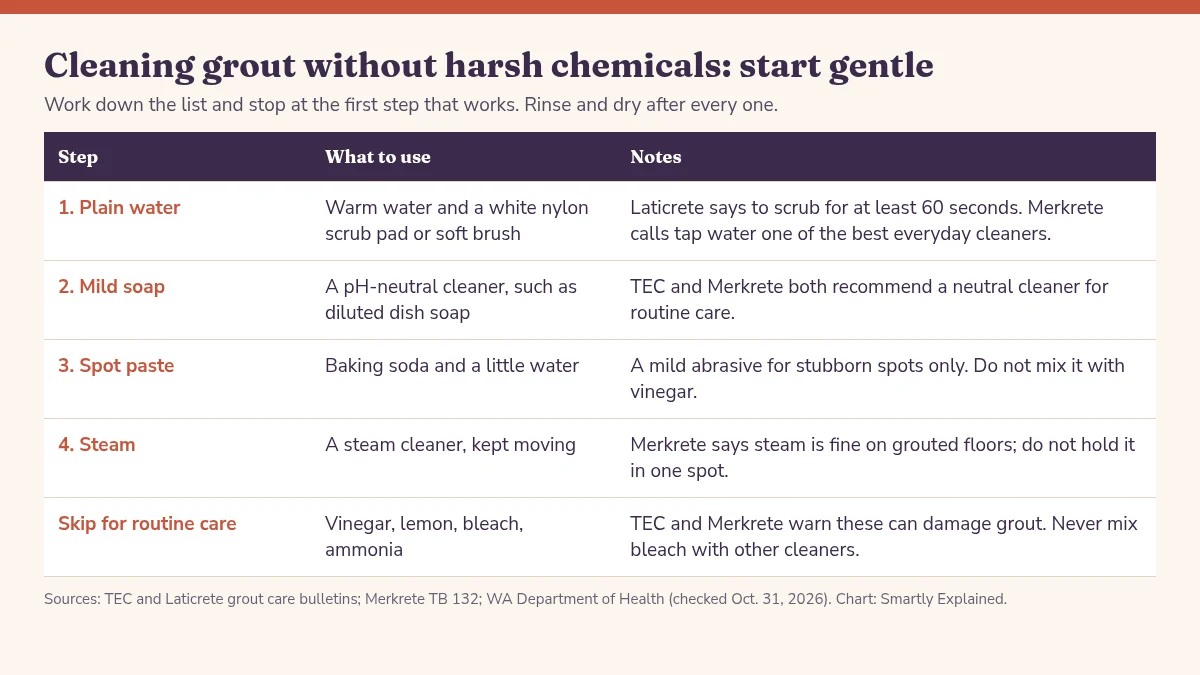
To clean grout without harsh chemicals, scrub it with warm water and a white nylon scrub pad first. If that isn't enough, use a pH-neutral cleaner such as a little dish soap in warm water. Save a baking soda paste for stubborn spots, then rinse with clean water and dry the floor or wall so the dirt doesn't settle back in. Grout makers say to skip vinegar, lemon, bleach and ammonia for routine cleaning, because they can damage the grout over time.
In this explainer
Why gentle works on grout
Cement-based grout soaks things up. Merkrete's grout care bulletin says cementitious grout is porous and will absorb liquids, which is how stains start. It recommends a neutral, pH-balanced cleaner for daily cleaning, and says one of the best everyday cleaners is household tap water.
No grout stays clean on its own, either. LATICRETE's cement grout care sheet notes that no cement-based grout is self-cleaning or absolutely stain-resistant, so regular cleaning and wiping up spills quickly matter more than any strong product.
Step by step
You'll need a bucket of warm water, a white nylon scrub pad or soft brush, mild dish soap, baking soda, clean rinse water and old towels (or a wet/dry vacuum for floors).
- Test a hidden spot. All three grout makers say to try any cleaning method on a small, inconspicuous area first.
- Scrub with warm water. LATICRETE says to scrub a stained grout line with warm water and a white nylon scrubbing pad for at least 60 seconds. Give it the full minute before reaching for anything else.
- Add a little dish soap. The TEC grout cleaning bulletin recommends a pH-neutral cleaner, such as diluted dishwashing soap, for everyday cleaning. A few drops in a bucket of warm water is plenty.
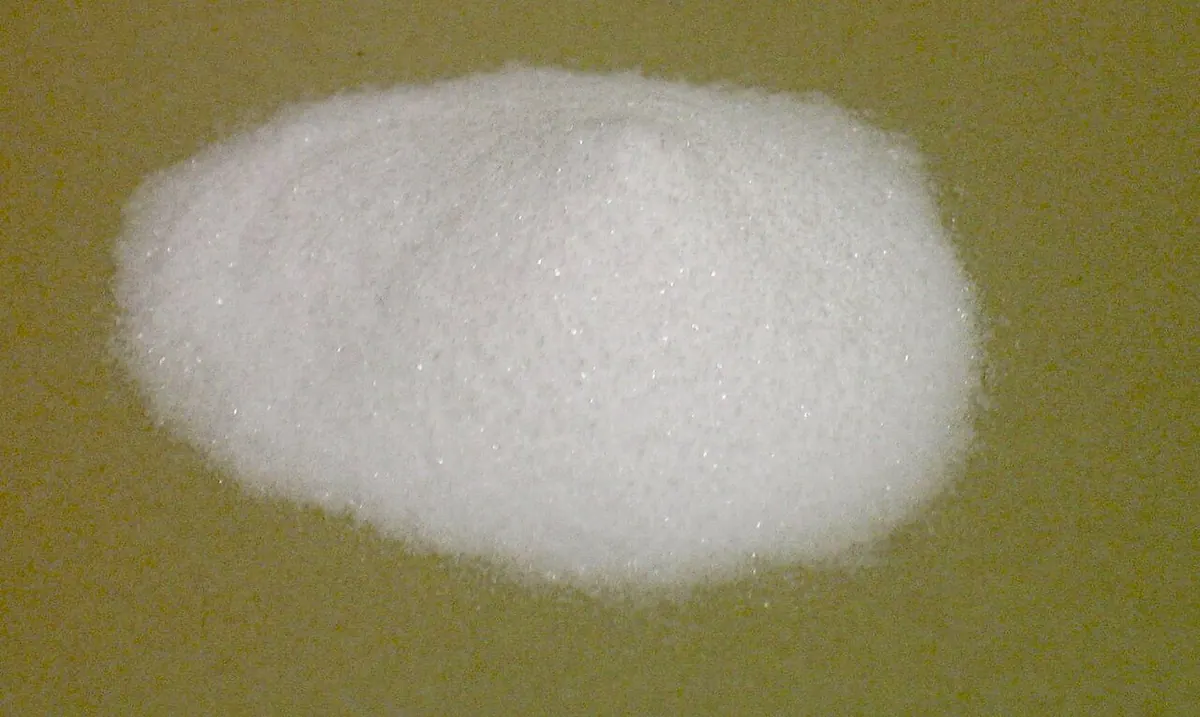
- Use baking soda only on stubborn spots. Baking soda is alkaline and mixes into an abrasive paste for scrubbing, according to Alabama Cooperative Extension. TEC says abrasive cleansers are for spot cleaning of stains only, not for everyday cleaning.
- Rinse with clean water. Merkrete says to always rinse with clean water so no cleaner stays in the joints.
- Lift the dirty water and dry. Merkrete says not to leave standing water on the grout, and that the best practice is to use a shop vac or some type of vacuum to lift it. On a shower wall, a towel does the same job.
Why not vinegar?
Vinegar is the most common "natural" grout tip, but grout makers advise against it for routine cleaning. TEC says not to use vinegar, bleach, ammonia or other general purpose cleaners that contain lemon, lime or other acids, because using these routinely can degrade the grout. Merkrete puts it more strongly: strong acids such as vinegar and lemon juice and strong bases such as bleach and ammonia could cause permanent damage to the grout and tile.
Acid is especially risky around stone. Alabama Cooperative Extension says lemon juice, like vinegar, is harmful to natural stone. LATICRETE adds that acid-based products are not recommended for polished marble and other acid-sensitive stones.
There's one exception. TEC lists an acid-based cleaner for hard water deposits on cement grout during deep cleaning, and its Power Grout cleaning bulletin says acidic cleaners are for infrequent use and should not be used on a regular basis. Treat it as an occasional fix, not a weekly habit.
Baking soda and vinegar cancel out
The fizzing paste you see in many guides doesn't add much. Alabama Cooperative Extension says to avoid adding acid and baking soda in equal parts, which would neutralize both ingredients and take away their cleaning power. Use baking soda on its own with water instead.
Steam: chemical-free deep cleaning
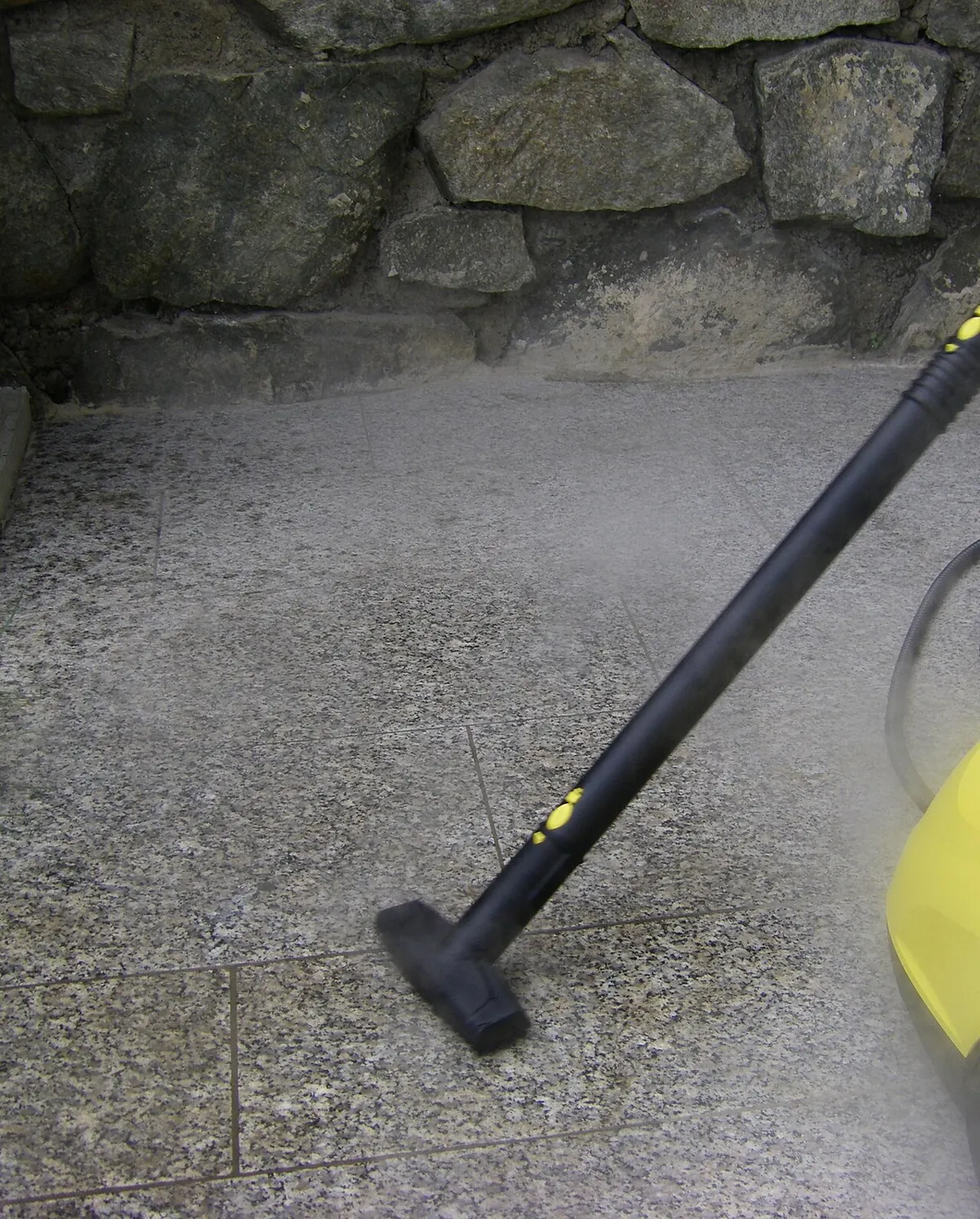
Steam uses only water and heat. Merkrete says steam cleaners can be used on grouted floors with little to no damage, as long as the steamer is approved for cement grout. Keep the nozzle moving: Merkrete warns not to leave it in one position for long periods, because the heat and pressure may cause problems. TEC says epoxy grout can handle steam cleaning.
Mold and mildew in shower grout
For mold on hard surfaces, the EPA's brief guide to mold says to scrub it off with detergent and water and dry completely. The EPA says chlorine bleach is not recommended as a routine practice during mold cleanup. If shower mold keeps coming back, the EPA says increasing ventilation (running a fan or opening a window) and cleaning more often will usually keep it to a minimum.
If you do reach for bleach or hydrogen peroxide, never combine products. The Washington State Department of Health says not to mix bleach with ammonia, acids or other cleaners. Bleach and ammonia make toxic chloramine gases, bleach and acids such as vinegar give off chlorine gas, and bleach also reacts with hydrogen peroxide. Alabama Cooperative Extension describes hydrogen peroxide as mild enough not to be dangerous but powerful enough to bleach stubborn stains, so test it on a hidden spot of colored grout first.
Keep grout cleaner for longer
- Wipe spills right away. TEC says acidic foods and drinks such as juice, wine, mustard, ketchup or soda can etch the grout.
- Seal cement grout. Merkrete recommends sealing to help prevent stains and make cleaning easier. LATICRETE says to reseal, if appropriate, once the area is clean and fully dry.
- Rinse away cleaner residue. TEC says to rinse thoroughly so cleaning solution doesn't build up in the grout joints.
- Skip wax and oil cleaners. TEC lists these among the products not to use on grout.
- Run the fan. The EPA suggests running the bathroom fan or opening the window when showering.
If the glass in the same shower is cloudy, our guide on how to remove hard water stains from a glass shower door covers the safe way to clear it.
Questions readers ask
What is the safest way to clean grout?
Start with warm water and a white nylon scrub pad, then a pH-neutral cleaner such as diluted dish soap. TEC, LATICRETE and Merkrete all recommend a neutral cleaner for routine grout care, and Merkrete calls household tap water one of the best everyday cleaners.
Is vinegar bad for grout?
Grout makers say not to use it routinely. TEC says vinegar, bleach, ammonia and cleaners with lemon or lime can degrade grout if used routinely, and Merkrete warns that strong acids and bases could cause permanent damage to the grout and tile.
Does baking soda and vinegar clean grout?
Not well as a paired mix. Alabama Cooperative Extension says adding acid and baking soda in equal parts neutralizes both and takes away their cleaning power. Baking soda on its own makes a mild abrasive paste for spot scrubbing.
Can you steam clean grout?
Usually, yes. Merkrete says steam cleaners can be used on grouted floors with little to no damage, as long as you don't hold the steamer in one position for long. TEC says epoxy grout can handle steam cleaning.
Sources and fact-check
- Grout Cleaning (technical bulletin, November 2025), TEC Specialty Products
- Cement Grout Care & Maintenance (TDS 113), LATICRETE
- Technical Bulletin #132: Care and Maintenance of Merkrete Cementitious Grout, Merkrete
- Power Grout Cleaning (technical bulletin), TEC Specialty Products
- Green Cleaning Solutions, Alabama Cooperative Extension System
- Dangers of Mixing Bleach with Cleaners, Washington State Department of Health
- A Brief Guide to Mold, Moisture and Your Home, U.S. EPA
Rules change. Spot something out of date? Tell us.