Jet Lag Flying West: Why It's Easier and How to Adjust Faster
Flying west is usually easier on your body clock than flying east: CDC puts average adaptation at about 1.5 hours a day westward vs 1 hour eastward. Get evening light, avoid bright early-morning light, stay up until local bedtime and keep naps short.

The short answer
Flying west is usually easier on your body than flying east. Your internal clock runs slightly longer than 24 hours, so it's easier to stay up later than to go to bed earlier, and CDC puts the average adjustment at about 1.5 hours a day after westward travel versus 1 hour a day after eastward travel (CDC Yellow Book). To adjust faster, get bright light in the evening, avoid bright light early in the morning, stay awake until local bedtime, and keep naps short.
In this explainer
Why west is easier
When you fly west, the clock on the wall at your destination is earlier than your body expects. CDC explains that your body has to "delay" its clock to catch up, meaning you go to sleep and wake up later. Because the average internal clock runs a bit longer than 24 hours, most people naturally drift later anyway, which is why westward trips are easier to adapt to.
| Flying west | Flying east | |
|---|---|---|
| What your body has to do | Shift later (delay) | Shift earlier (advance) |
| Average adaptation rate | About 1.5 hours a day | About 1 hour a day |
| Light that helps | Evening light | Morning light |
| Light to avoid | Bright light early in the morning | Light in the evening |
Source: CDC Yellow Book 2026, including tips adapted from the Walter Reed Army Institute of Research.
Rough recovery time
Using CDC's average rates, here's what that means for some common trips. Your own adjustment may be faster or slower.
| Time zones crossed westward | Approximate days to adjust (at 1.5 hours/day) |
|---|---|
| 3 (for example, New York to Los Angeles) | About 2 |
| 5 to 6 (for example, Washington, D.C. to Honolulu) | About 3 to 4 |
| 8 to 9 | About 5 to 6 |
Before you fly
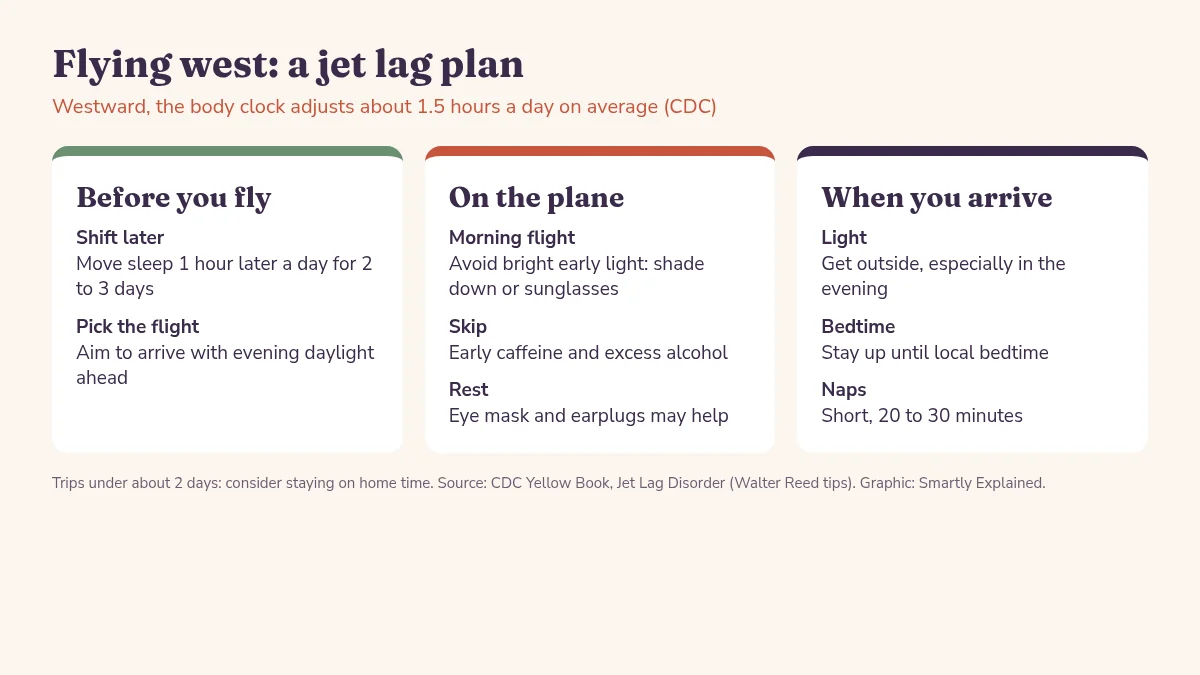
- Shift your sleep later. CDC says moving sleep 1 hour later per day for the 2 to 3 days before a westward trip may cut the time it takes to adjust.
- Pick a flight with your arrival light in mind. CDC suggests choosing an arrival time that gives you the right light exposure, which for westward trips means evening daylight.
On the plane
CDC's chapter recommends timing your meals, sleep and light exposure to the destination time zone. For a morning flight west, the Walter Reed tips in the chapter say:
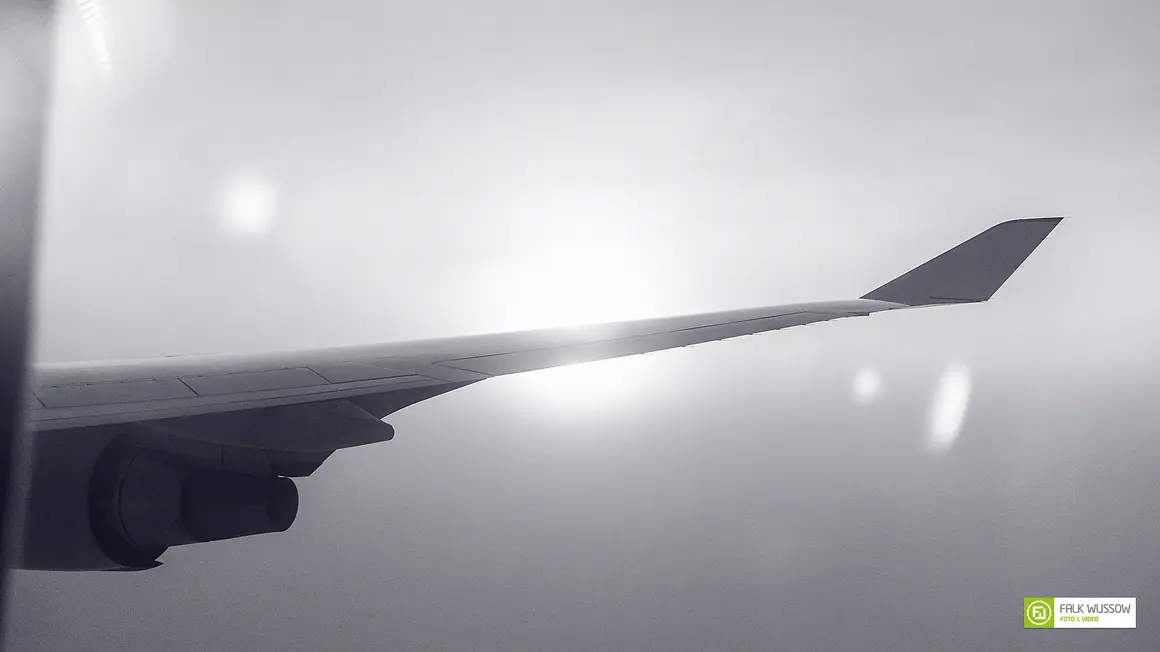
- Avoid bright light in the early morning: close the window shade or wear dark sunglasses.
- Avoid caffeine early in the morning.
- Nap in the early morning; an eye mask and earplugs may help.
CDC also recommends staying hydrated and avoiding excess alcohol, which can fragment sleep and add to dehydration. If your flight is overnight, our guide on how to sleep on a red-eye flight covers seat choice and what to pack.
When you arrive
- Get outside. CDC says to maximize natural light at your destination, and for westward trips evening light helps your clock shift later.
- Stay up until local bedtime. The Walter Reed tips list this as the main arrival step for westward travel. Staying awake during the local day builds sleep pressure for the night.
- Keep naps short. CDC says 20 to 30 minute naps can help alertness, but longer naps can interfere with nighttime sleep.
- Watch the caffeine cutoff. CDC notes caffeine's half-life is about 5 hours and advises avoiding stimulants in the hours before bed.
Short trips: don't bother adjusting
For trips shorter than about 2 days, the Walter Reed tips in the CDC chapter suggest keeping your home sleep, activity and meal schedule instead of trying to adapt.
A note on sleep aids
CDC's chapter discusses melatonin and sleep medications for jet lag, and stresses that timing matters and that melatonin isn't regulated by the FDA, so the dose may differ from the label. Talk to a doctor or pharmacist before using any of them, especially with other medications or with children.
Questions readers ask
Is jet lag worse flying east or west?
East, for most people. CDC explains that the body clock runs slightly longer than 24 hours, so it's easier to shift later (west) than earlier (east). Average adaptation is about 1.5 hours a day westward and 1 hour a day eastward.
How long does jet lag last flying west?
Using CDC's average of about 1.5 hours of adjustment a day, a 6-hour westward shift takes roughly four days. That's an average; individual results vary.
Should I nap after flying west?
Keep it short. CDC says short daytime naps of 20 to 30 minutes can help alertness, while longer naps can make it harder to sleep at night.
Should I adjust for a short trip?
For trips of less than about 2 days, the Walter Reed tips in the CDC chapter suggest staying on your home-time schedule instead of adapting.
Sources and fact-check
Rules change. Spot something out of date? Tell us.